
Origin. Skill. Attention.
01 · Conviction
A conviction that becomes visible in every detail
Home is a point of view
A conviction that becomes visible in every detail
Philosophy at Mesnerhaus is not an abstract mission statement or a collection of grand promises. It reveals itself in daily practice: in the decision for a particular product, in the question of its origin, in the care taken during preparation, and in the manner in which a guest is received and accompanied throughout their stay.
Many of these decisions remain invisible to guests at first. They lie in the preparation, in purchasing, in conversations with producers, in repeated tastings, and in the willingness to continually question familiar routines. Only in their interplay do they become perceptible—as clarity on the plate, as calm in service, and as an atmosphere in which one feels seen as a person, not as a reservation number.
Mesnerhaus unites high standards with groundedness. Exceptional quality need not announce itself loudly here. It should feel natural, without being taken for granted. Behind this ease lie experience, discipline, and a shared understanding that every detail contributes to the overall experience.
Lungau as the starting point
Lungau is far more than a scenic backdrop for Mesnerhaus. It is origin, living space, and culinary starting point. The seasons are distinctly felt, the paths to producers remain personal, and many products speak directly of the surroundings in which they came to be.
This proximity creates a clear identity. It does not mean, however, that only the familiar is repeated or tradition preserved unchanged. Rather, the region forms the foundation from which new ideas are developed. International experience, modern techniques, and influences from other cuisines may flow in, as long as they deepen rather than obscure one’s own signature.
Mesnerhaus therefore does not understand home as a boundary. Home is a point of view. Those who know where they come from can look openly at the world, select, learn, and yet remain unmistakable.
02 · Product
Quality begins long before the kitchen
The product sets the direction
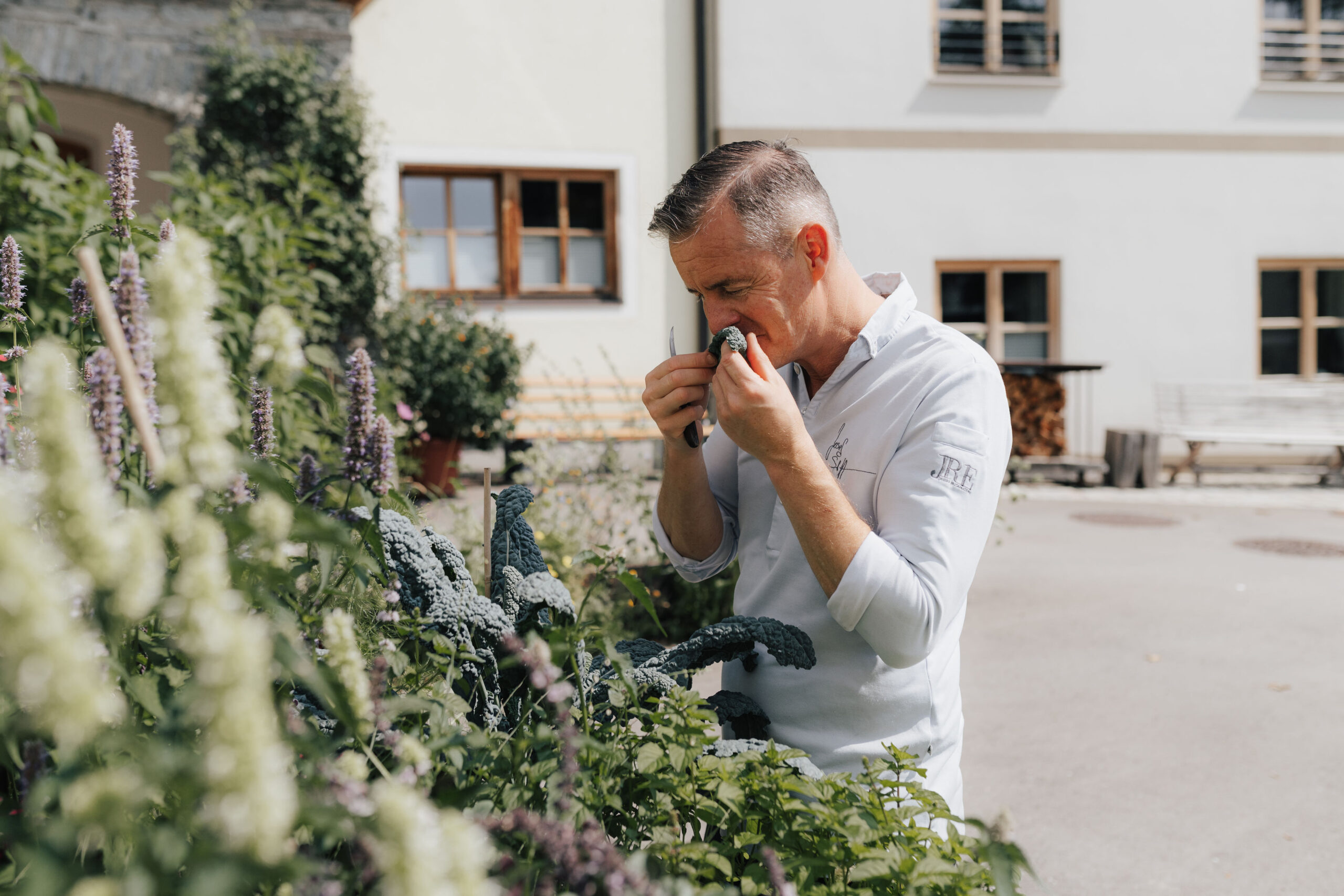
At the beginning of a dish often stands a product, not a technical idea. Flavor, ripeness, texture, and origin determine the direction in which a dish can develop. The kitchen listens to the product, so to speak, before giving it form.
It makes no difference whether it is a precious ingredient or a familiar everyday food. A simple Eachtling potato, a piece of vegetable, a fish from cold water, or a freshly gathered mushroom variety deserve the same attention. The value of an ingredient arises not from its price, but from its quality and the conscious handling of it.
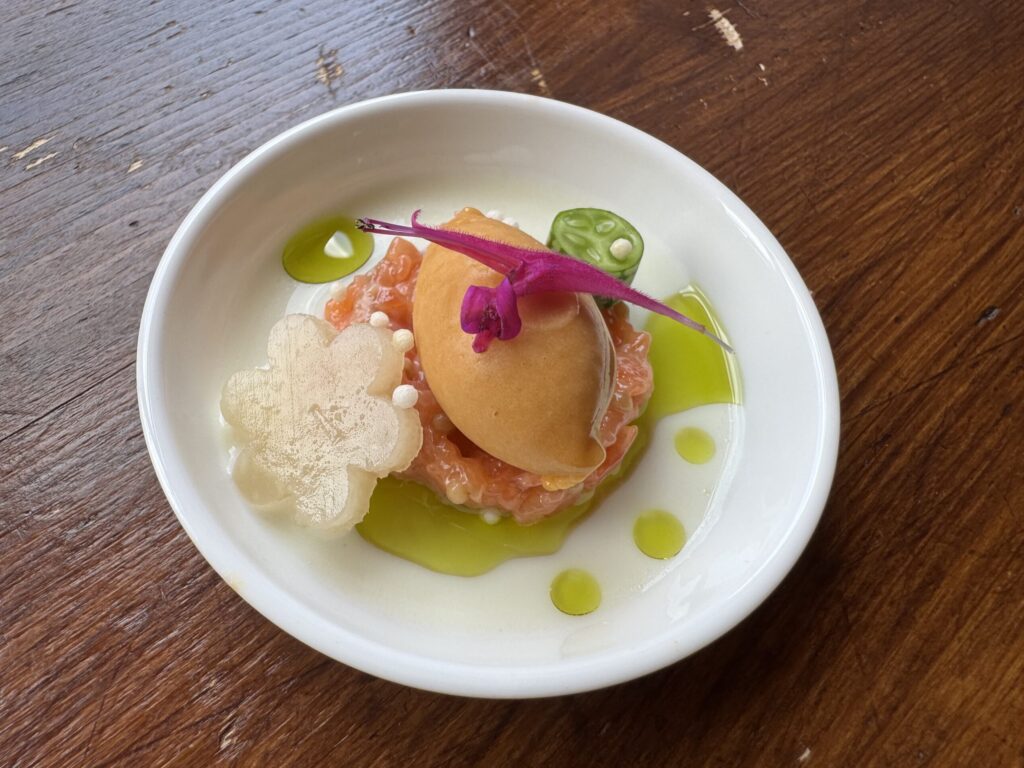
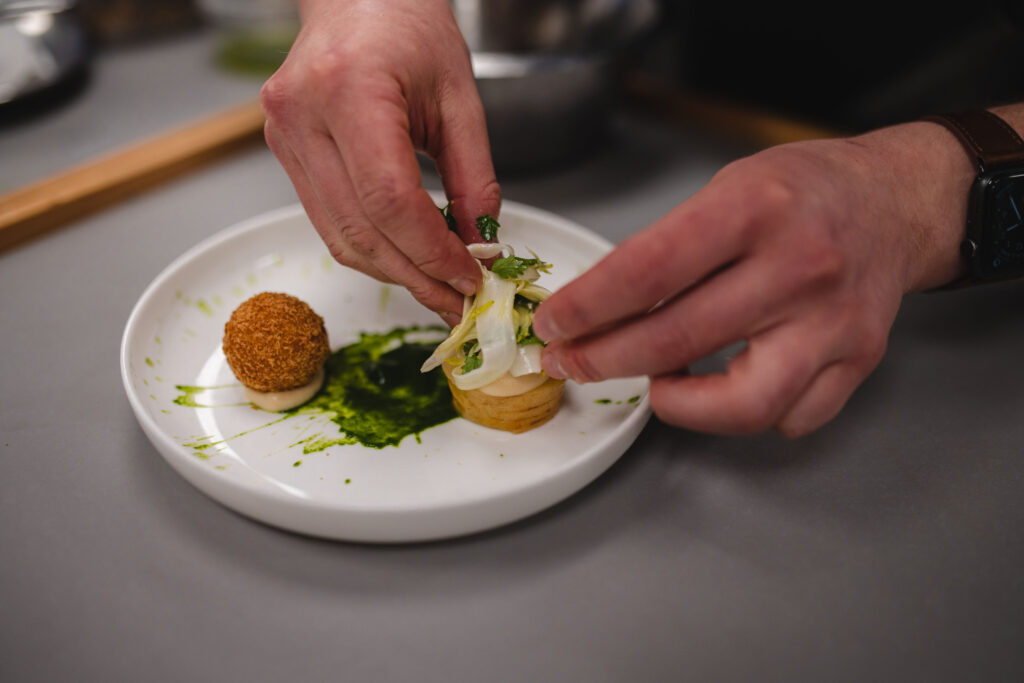
The dishes at Mesnerhaus should remain comprehensible. They may surprise, create contrasts, and open new perspectives. Yet every component requires a culinary reason. It is not the number of elements that makes a dish special, but the precision of their interplay.
The Lungau Eachtling potato exemplifies this approach. As a familiar product of the region, it is not relegated to a supporting role, but taken seriously and placed at the center. Therein lies an essential idea of the cuisine: the seemingly simple can become extraordinary when one recognizes its quality and gives it the necessary space.
Regionality with an open view
Regionality at Mesnerhaus is not a rigid set of rules or a formal kilometer specification. The proximity of a product alone does not guarantee quality. What matters are flavor, production, processing, and the conviction of the people behind it.
Wherever it makes sense, the house works with products from Lungau and the Salzburg region. This proximity enables freshness, short coordination, and relationships that extend far beyond an anonymous order. At the same time, the kitchen remains open to selected ingredients from elsewhere, when they convince in quality and character.
The region is therefore not used to exclude the world. Rather, it gives Mesnerhaus its own voice. From this clear starting point, international influences can be absorbed without the cuisine becoming interchangeable.
Producers are partners
The quality of a dish begins long before the work in the kitchen. It begins in fields, in stables, in waters, in the forest, and in small artisanal operations. That is why producers are not interchangeable suppliers for Mesnerhaus, but important partners.
Personal collaboration creates knowledge. One understands how an animal was raised, when a vegetable reaches its optimal ripeness, which conditions shape a fish, or why a particular harvest differs from the previous year. This knowledge transforms purchasing and directly affects preparation.

Long-term relationships also enable joint development. Producers come to know the needs of the kitchen, while the kitchen respects the natural and artisanal limits of production. Not everything is available at all times, not every quantity can be planned. It is precisely this reality that keeps the work alive and fosters a cuisine that responds to the actual season.
Trust does not replace quality control. It deepens it. Those who know the people behind a product can ask more precisely, select more consciously, and credibly tell guests where a flavor comes from.
The forest as a space of inspiration
The forest is larder, refuge, and source of new thoughts. While hiking and gathering mushrooms, changes become visible that are easily overlooked in daily life: the first scent of damp earth, young shoots, the brief season of certain mushrooms, or the varying textures of moss, bark, and herbs.
Such impressions can lead to a dish, but need not be translated literally. It is not about decoratively reconstructing nature on a plate. Rather, scents, aromas, and memories can create a mood from which a culinary idea develops.

Engaging with nature demands both knowledge and restraint. Foraging is done consciously and responsibly. Not everything that appears available belongs in the kitchen. The landscape should not be exploited, but understood and respected.
In this way, the forest becomes a space of experience. It reminds us that flavor is bound to places, seasons, and personal encounters—and that a seemingly simple product can touch more deeply than a spectacular effect.
03 · Craft
Precision, reduction, and personal intuition
Pleasure remains the measure
Precision, craft, and reduction
Technique forms the foundation of the cuisine, but must never become an end in itself. Modern methods and artisanal experience help to concentrate flavor, refine textures, and present products in a new clarity.
Behind a seemingly reduced plate can stand a long development. Proportions are altered, temperatures tested, components discarded, and processes refined until the dish appears effortless. Reduction does not mean simplicity in the sense of little work. It is the result of many conscious decisions.

The goal is a cuisine with tension and lightness. Dishes should work without lengthy explanation, even when a complex idea stands behind them. The guest may become curious, but should not feel lectured. Pleasure remains the measure.
Wine as personal accompaniment
At Mesnerhaus, wine is not understood as a status symbol. It should open a dish, connect aromas, and support the character of a menu. Equally important, however, is that it suits the guest.
A good recommendation therefore considers more than a theoretically perfect pairing. Personal preferences, curiosity, occasion, and desired intensity all play a role. Some guests wish to deepen familiar styles, others to consciously discover something new. Both deserve the same attention.
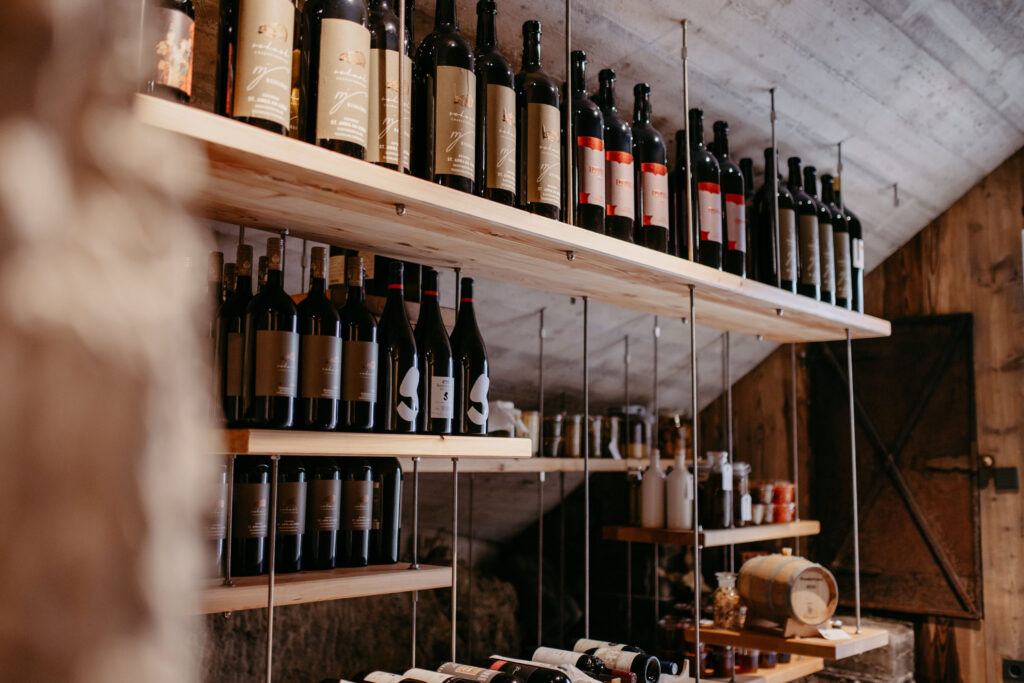
The consultation remains comprehensible and free of unnecessary staging. Expertise should provide orientation, not create distance. At the center stand shared enjoyment and the trust to choose a bottle or accompaniment that enriches the evening.
Austrian wines occupy a special place. Selected international positions complement the cellar. What matters is not origin alone, but the personality of the wine and the question of what story it can tell together with a dish.
04 · Hospitality
Personal, attentive, and deliberately small
Hospitality without staging
Personal service does not mean being constantly visible. It means being present at the right moment. Some guests desire extensive conversation and recommendations, others seek calm and restraint. Good hospitality recognizes this difference.
At Mesnerhaus, there is therefore no rigid sequence imposed on every person in the same form. Professionalism reveals itself in attention, timing, and the ability to adapt to different needs.

Proximity must never be intrusive. Restraint must never appear cold. Between these poles emerges that form of service which seems natural and yet is precisely observed.
The stay should create space: for enjoyment, conversation, silence, and encounter. Guests may let themselves go, because they are reliably cared for in the background.
A team that carries the same conviction
The experience at Mesnerhaus is not created by individuals alone. Kitchen, service, hotel, and organization must interlock. Every task influences a guest’s stay, even when it takes place behind the scenes.
A manageable team enables short paths and direct communication. At the same time, every member visibly bears responsibility. Quality emerges only when information is shared, mistakes openly addressed, and common standards understood.
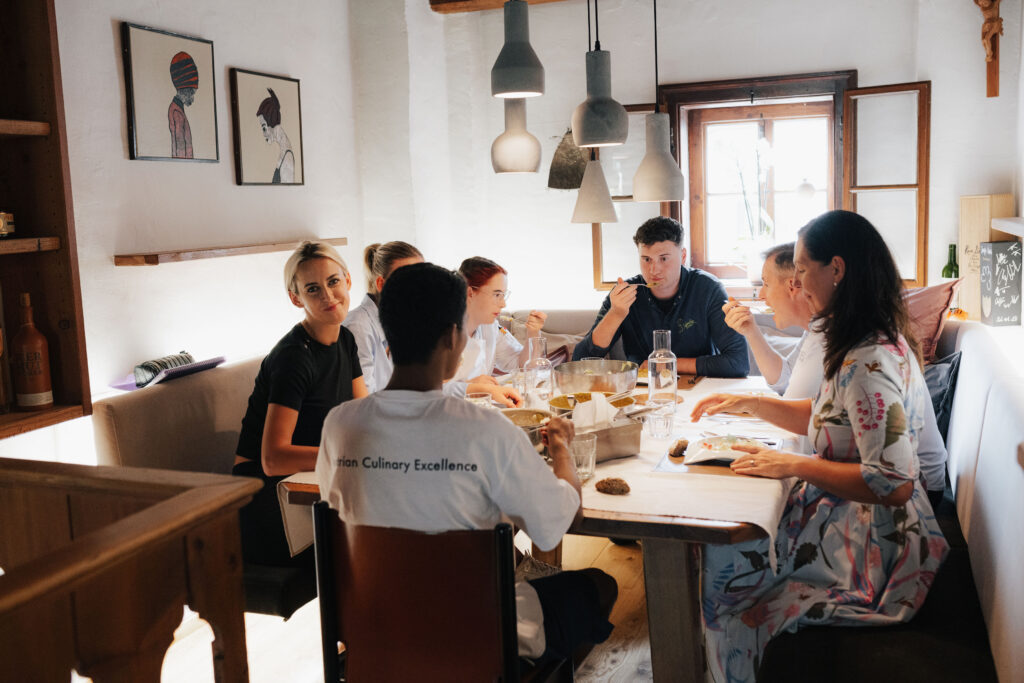
Being together also includes spending time at the communal table. A meal among the team is more than sustenance. It creates space for exchange and reminds us that hospitality must first be lived within the house.
Young staff members should not merely execute routines, but understand connections. Passing on knowledge, responsibility, and enthusiasm therefore belongs to the philosophy as much as working with guests.
Deliberately small and personal
Mesnerhaus does not strive for growth at any cost. Its manageable size is not a limitation, but a conscious quality decision.
Personal presence, individual care, and a clear view of every detail cannot be multiplied indefinitely. The larger a structure becomes, the more processes threaten to standardize and encounters to lose immediacy.
The Boutique hotel follows the same idea. It should not be an anonymous accommodation operation, but a natural extension of the culinary evening. Guests can arrive, enjoy, sleep, and continue the next morning without haste.
Development therefore does not automatically mean more rooms, more tables, or more guests. It means deepening what exists, improving processes, and implementing new ideas without losing the personal character of the house.
05 · Responsibility
Respect, constancy, and development
Responsibility for the whole
A responsible operation does not reveal itself in a single measure. It emerges from many decisions made anew each day: in purchasing, in storage, in preparation, in portion sizes, and in planning the offering.
Ingredients should be used as comprehensively and sensibly as possible. Not only the supposedly best pieces deserve attention. Trimmings, peels, bones, leaves, or less familiar parts can provide valuable foundations for sauces, stocks, seasonings, and independent dishes.
This conviction unites culinary ambition with respect. Those who view a product in its entirety honor not only the ingredient, but also the labor, nature, and resources that were necessary for its creation.
Responsibility also includes economic prudence. A small house can secure its quality long-term only if it plans realistically, employs resources consciously, and shapes relationships with staff and partners sustainably. Constancy is therefore as important as innovation.
Awards as result, not as purpose
Recognition and awards are valuable confirmations. They honor the work of the team, create visibility, and show that consistent quality is perceived far beyond the region.
They are not, however, the starting point of daily work. A dish does not come into being to fulfill a rating. A guest is not attentively accompanied because a test might be imminent. The standard applies equally every evening and to every person.
The most important feedback therefore remains personal: when guests depart satisfied, when they return, bring friends, and connect a stay with a lasting memory.
Awards can make quality visible. The true significance of Mesnerhaus, however, emerges in the many individual moments that cannot be expressed in points.
Development without loss of the essential
A clear philosophy does not mean stagnation. Mesnerhaus should remain curious, discover new products, test techniques, and seek exchange with other chefs, hosts, winemakers, producers, and artists.
New impulses are not adopted simply because they are modern. They must suit the house and create genuine added value. Change is meaningful when it strengthens one’s own identity.
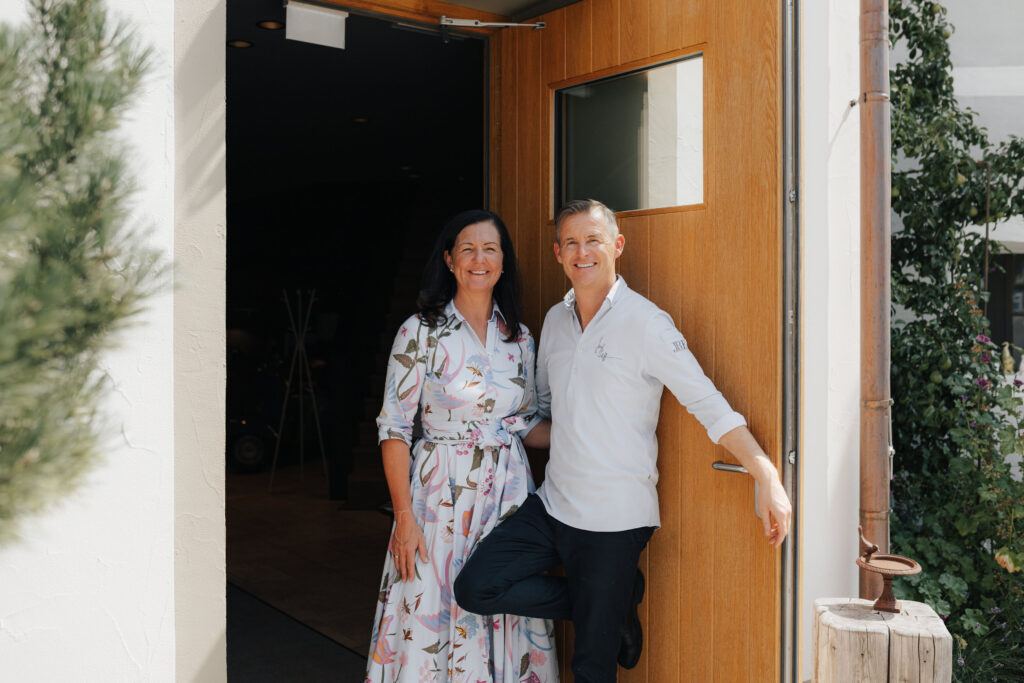
The essential remains constant: honest products, precise craft, personal hospitality, responsible work, and the deep connection to Lungau.
Thus Mesnerhaus can continue to develop without becoming interchangeable. It remains open to the world while firmly anchored in the place that gives it its unmistakable voice.
Knowing one’s origins.
Acting with conviction.
Remaining personal.
Experience Mesnerhaus
Conviction that reaches the guest
Discover a cuisine that knows its origins, a wine accompaniment with personal intuition, and a hospitality that remains palpable from arrival to farewell.