
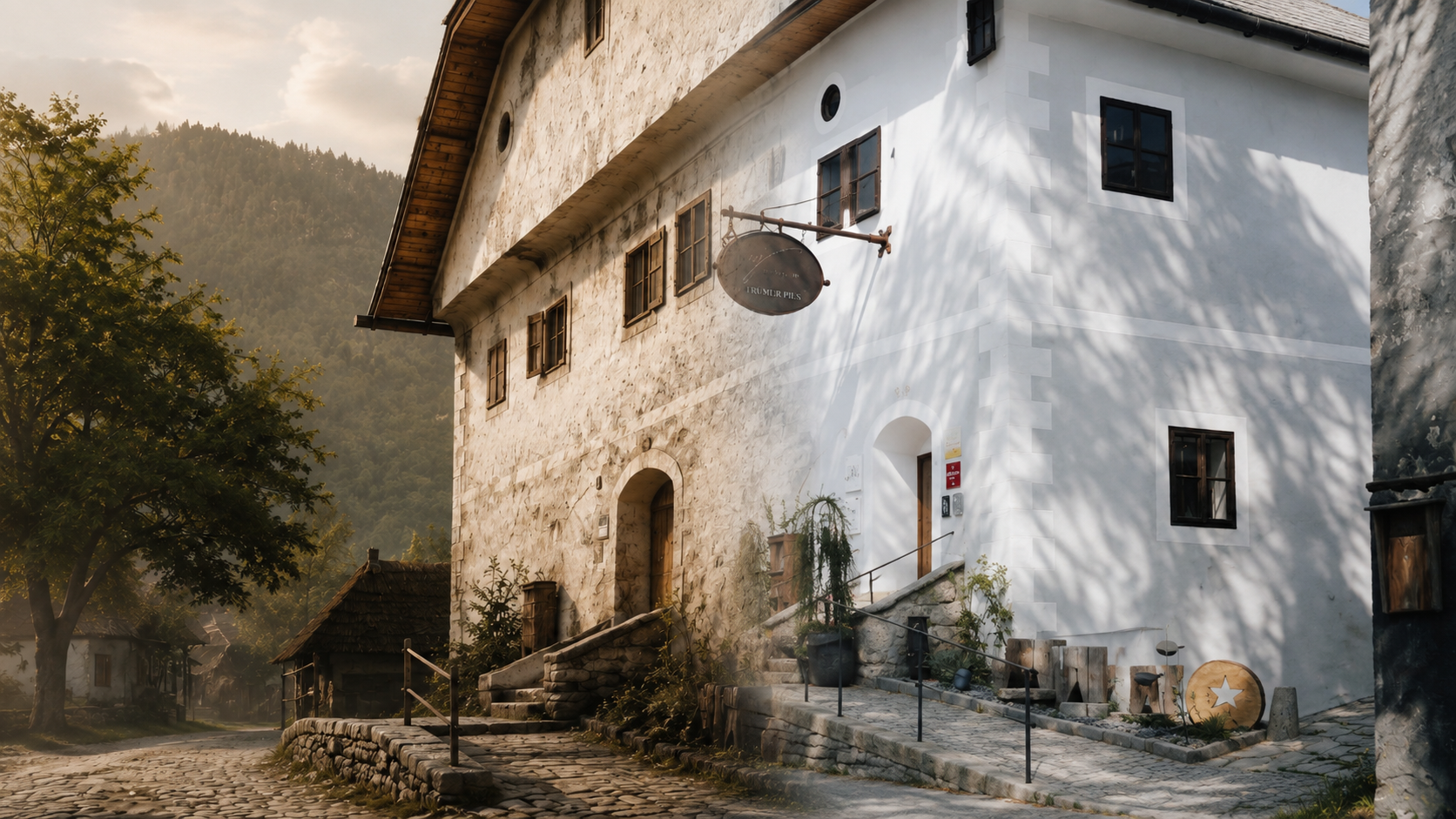
One house. So much love.
1420–today
A house as a witness to its time
More than six centuries under one roof
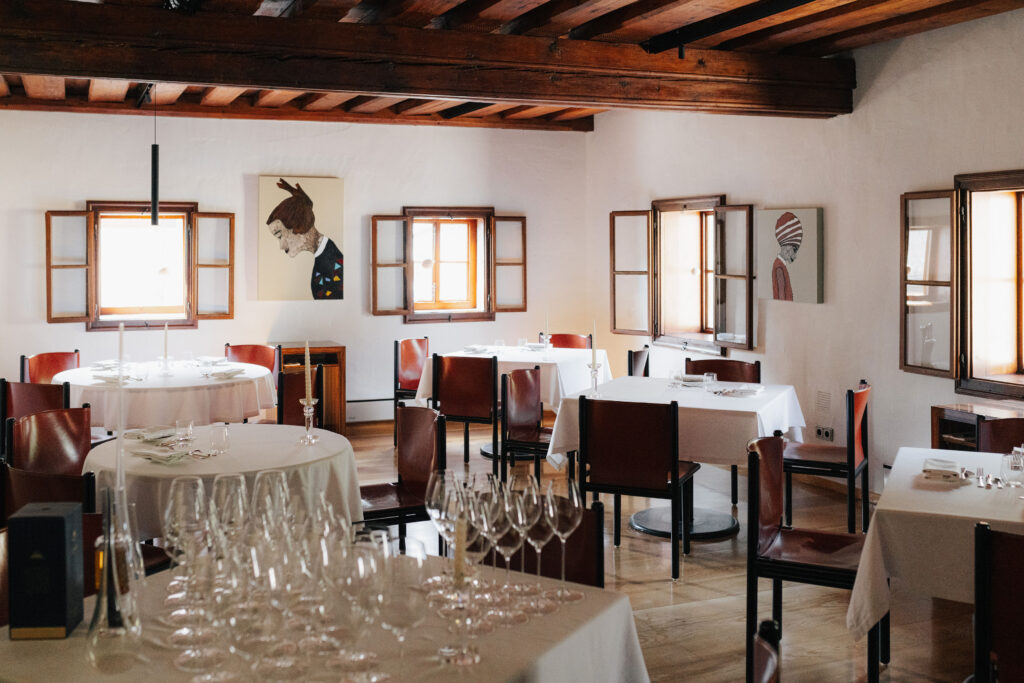
Those who step into the Mesnerhaus today encounter more than a restaurant and Boutique-Hotel. The building carries the traces of many centuries within it. Massive walls, historic parlours, timber ceilings and vaults speak of people who worked, lived, learned and welcomed guests here.
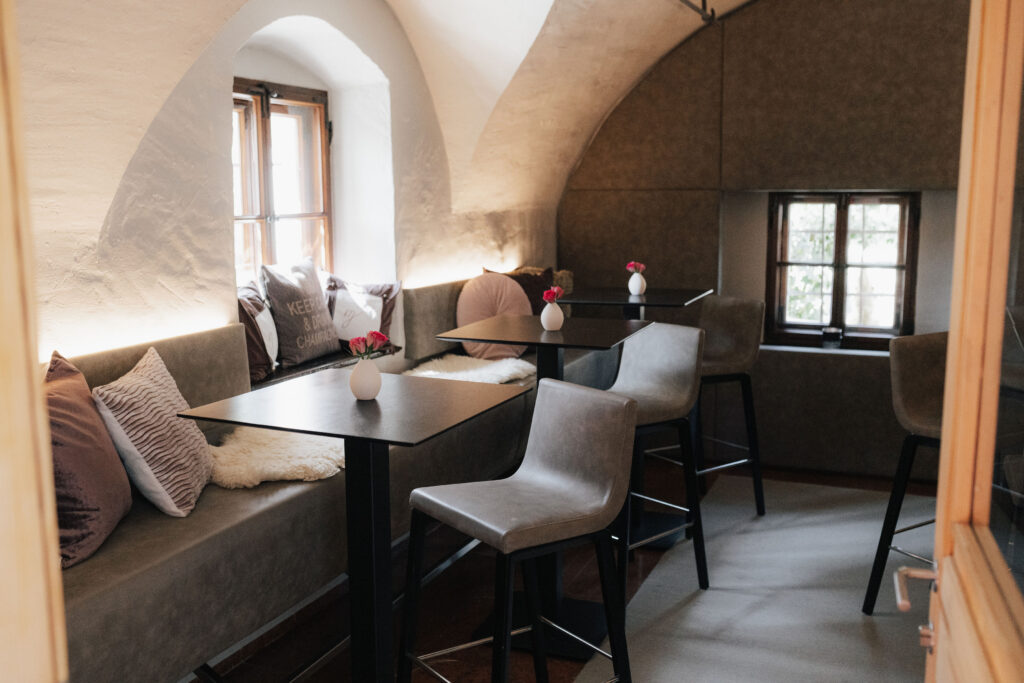
The house’s history is closely intertwined with the development of Mauterndorf. The village lies on ancient routes and has historic roots reaching back to Roman times. In the late Middle Ages, Lungau was shaped by mining, trade and crafts. It was in this setting that the building now known as the Mesnerhaus came into being.
Not every detail of its early history can be documented without gaps. Documented events, structural traces and local tradition therefore merge into a narrative that speaks as much of the house as it does of the memory of an entire region.
around 1420
Roots in mining
Built for a time of new beginnings
The beginnings of the Mesnerhaus are dated to the year 1420. Its origins therefore fall in the 15th century—a time when mining in Lungau brought economic momentum and new opportunities. Gold, silver and other ores drew miners, craftsmen, merchants and specialists to the region.
The house’s early residents and builders are associated with this mining milieu. The building was created to be robust and practical. Its strong walls offered protection from the harsh climate and formed rooms that could be adapted again and again over generations.
It is precisely this solid construction that likely played a decisive role in enabling the Mesnerhaus to endure the centuries that followed. As ways of life, professions and uses changed, the core of the building remained.
Its early history is a reminder that Mauterndorf was not an isolated place without connections. Mining and ancient routes made Lungau a region of exchange. People, goods, knowledge and ideas passed through—and left traces that remain visible to this day.
15th–16th c.
Between history and legend
Paracelsus and the village’s memory
With the economic upswing, it was not only craftsmen and merchants who came to the region. Physicians, naturalists and scholars, too, took an interest in the minerals, plants and remedies of the Alpine world.
A local tradition links the physician, natural philosopher and alchemist Theophrastus Bombast von Hohenheim—known as Paracelsus—with Mauterndorf and the Mesnerhaus. Whether he actually lived or worked in these very rooms cannot be proven with historical certainty. For that very reason, this episode belongs to the realm between documented history and living legend.
Even so, the story fits its time. Paracelsus engaged deeply with the effects of minerals, plants and natural substances. Lungau—with its mines, alpine herbs and old trade routes—would have been an entirely plausible draw for such a researcher.
For the Mesnerhaus, this tradition matters less as proof than as part of its cultural memory. It shows how closely the history of a house can be intertwined with stories passed down through generations.
Told with care: This episode is explicitly presented as local tradition—not as a historically verified fact.
17th–18th c.
The house changes
To preserve is to keep building
In the centuries that followed, the Mesnerhaus was further developed structurally. Open hearths were replaced by masonry fireplaces, rooms were reorganised, and the upper floor—including its timber ceilings—was renewed. Such interventions were not only about comfort. They increased safety and adapted the building to changing ways of living and working.
The preserved timber ceilings and historic building elements still convey the craftsmanship of that period. They make it clear that the house was not created as an unchanging monument, but continued to evolve over centuries.
This phase of building gained particular significance through a devastating major fire that damaged large parts of Mauterndorf. According to tradition, the Mesnerhaus was spared complete destruction. As a result, essential parts of its historic fabric could be preserved.
That a building from the early 15th century still stands today is no single miracle. It is the result of sound construction, fortunate circumstances, and many people who repaired it, used it, and did not give up on it.
A house stays alive when each generation preserves something—and adds something.
19th–20th c.
A house for the community
School, care and community life
In the 19th and 20th centuries, the building changed its role several times. For a period, it served the community as a schoolhouse, becoming a place of learning. Children sat in its parlours while the house fulfilled a function that went far beyond private living.
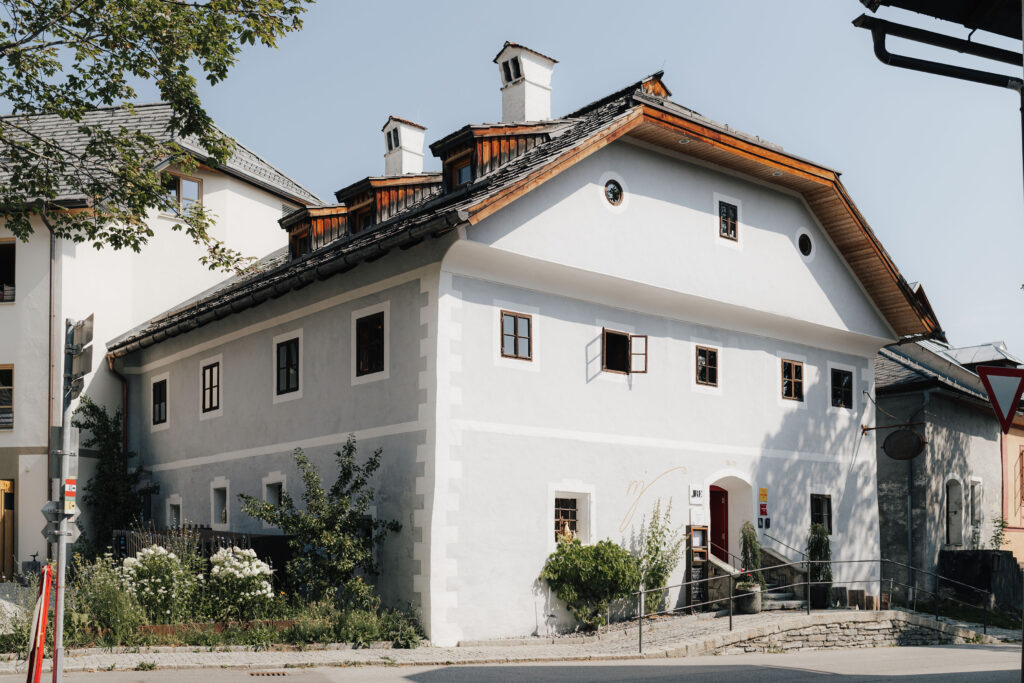
Later, it was used as a residence for the elderly. Once again, everyday life within the old walls changed: classrooms became living and communal areas, and a house of education became a place of care.
The building received its present name through yet another use. It was the home of the sacristan (Mesner) of the neighbouring pilgrimage church. The sacristan took on important duties connected with the church, services and community life. In this way, the house became part of a closely interwoven religious and social setting.
These different purposes shape the Mesnerhaus’s distinctive character. It was never merely a backdrop. For centuries, it served the very real needs of the people of Mauterndorf.
Preservation
Saved from decay
Responsibility for a living fabric
Like many historic buildings, the Mesnerhaus lost its original function over time and was threatened by decay. Old houses can only be preserved when someone recognises their value and is willing to take responsibility.
A decisive role was played by Mr Schöklitsch and the architect Volkmar Burgstaller. They championed the building and carried out a careful restoration. The aim was not to rebuild the house back to some supposedly ideal original state. Rather, its evolved fabric was to be secured and prepared for a new use.
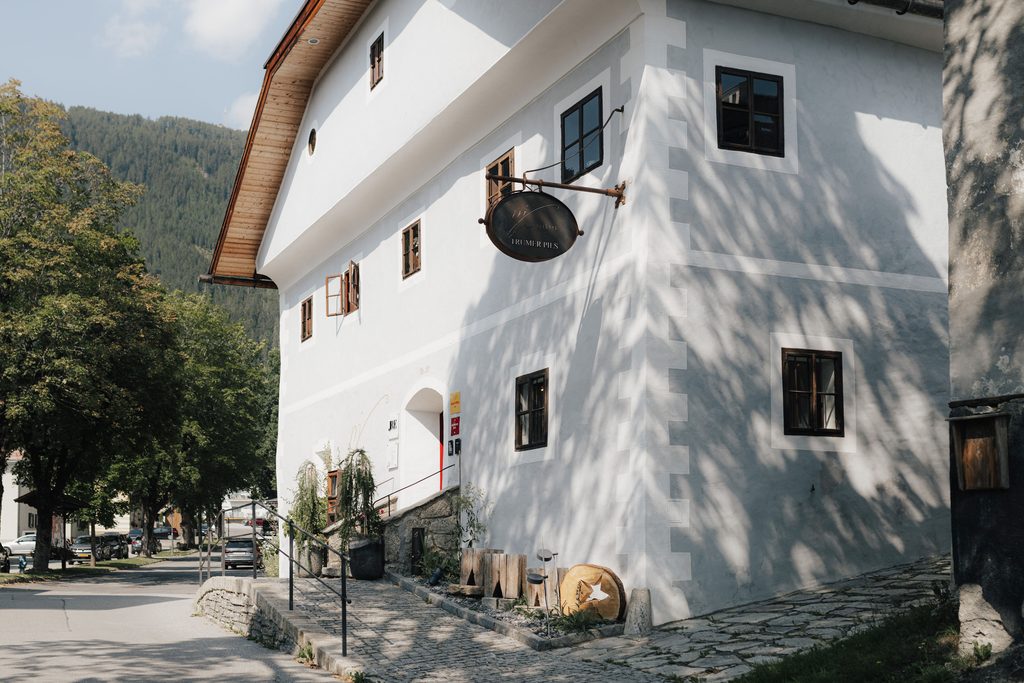
This very combination of preservation and continued development still defines the Mesnerhaus today. Historic elements are allowed to remain visible, while the building continues to serve a living purpose. In this way, heritage conservation does not become standstill, but a prerequisite for the future.
1990s
The beginning of its gourmet story
Old parlours, new culinary ambitions
In the 1990s, a new chapter began. Top chef Franz Fuiko transformed the old parlours into a gourmet restaurant. The house thus gained yet another purpose—one that suited its long history of people coming together, while also setting entirely new standards.
Historic rooms now had to be aligned with the demands of professional gastronomy. Kitchen, service and atmosphere needed to function at a high level—without the building losing its character.
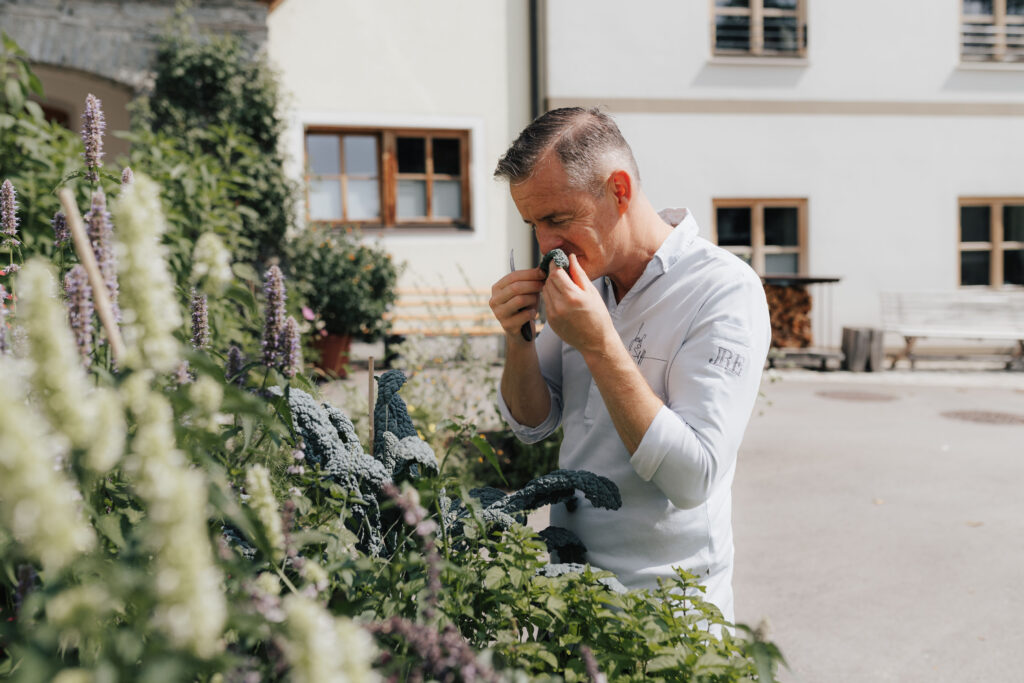
Franz Fuiko—named Chef of the Year in 1995—thus laid an essential foundation for the Mesnerhaus’s later reputation. A rescued historic building became a culinary address for which guests travelled to Mauterndorf with intent.
This development was not a departure from the past. It continued a tradition that had accompanied the house for centuries: people came together, shared time, and experienced community within its walls.
2007
Maria and Josef Steffner take over
A distinct signature within a long history
In 2007, Maria and Josef Steffner took over the Mesnerhaus. For Maria, it was also a return to a familiar place: she had already completed her training in the house under Gerhard Gugg, the immediate predecessor.
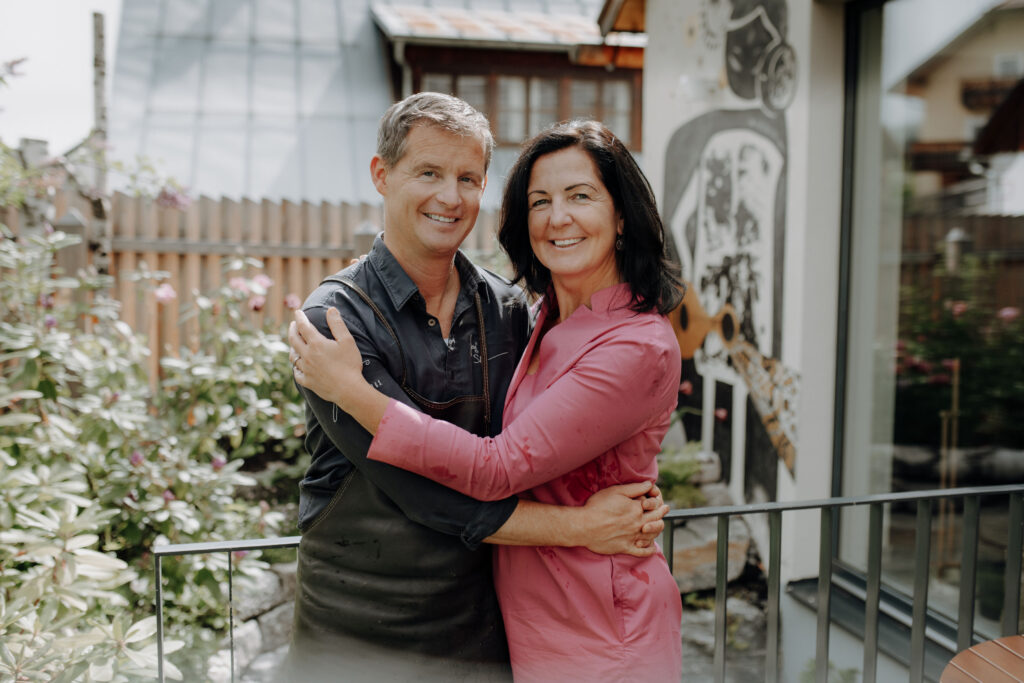
Their takeover did not mark a complete new beginning. Maria and Josef stepped into an existing story, assumed responsibility for its gastronomic reputation, and at the same time developed a signature of their own.
The historic building posed particular demands. Changes had to be functional while also respecting the listed fabric. Every further development thus became a dialogue between the needs of a modern operation and the character of a centuries-old house.
Since 2010, Maria and Josef have been not only operators but owners. In this way, the Mesnerhaus ultimately became their shared life’s work—and its story gained a long-term perspective.
Today
A history that lives on
From restaurant to house of hosts
With the Boutique-Hotel, a small number of individually designed rooms and a suite were created. The Mesnerhaus thus became a complete house of hosts: arrive, dine, enjoy wine, sleep—and the next morning, have breakfast in peace.
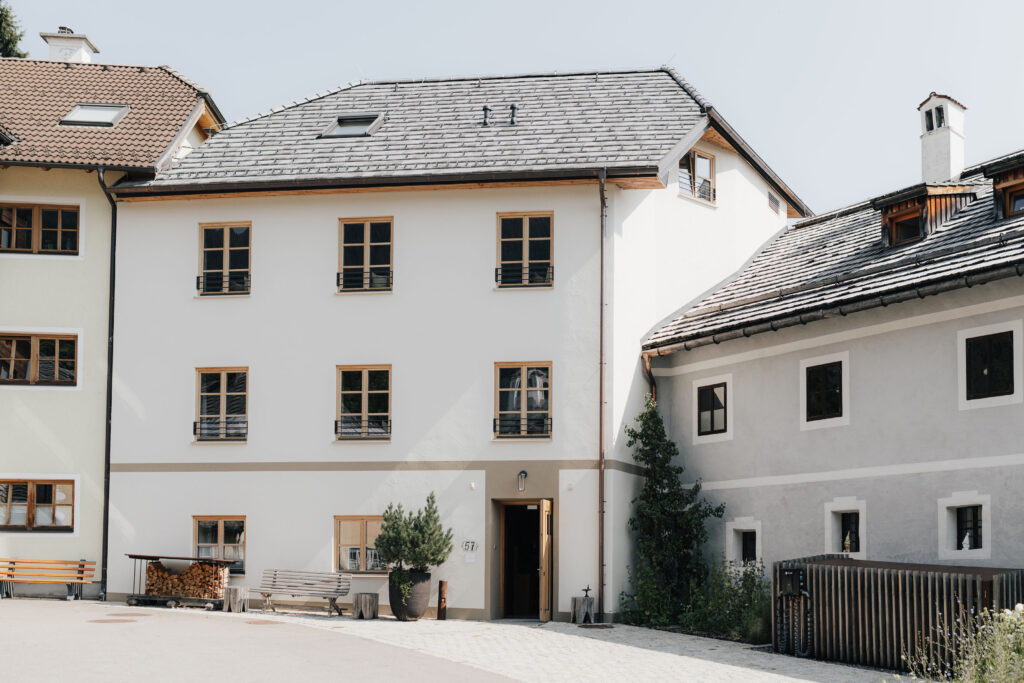
This expansion, too, follows the place’s historical logic. Over the centuries, the house has repeatedly changed its function without losing its identity. Rooms for work, learning and living became rooms for enjoyment and rest.
Old walls and parlours are not a decorative backdrop; they lend the experience depth and unmistakable character. Maria and Josef see themselves as hosts in this house—and as custodians of a cultural heritage. They carry it forward by using the building, caring for it, and filling it with new life.
And so the Mesnerhaus remains what it has been for centuries: a place for people. Its story does not end with a date. It is rewritten every day.
Preserved yesterday.
Lived today.
Continued tomorrow.
Three sides of a house
Discover the people—and the philosophy
This story tells how the building became what it is today. Get to know the people behind it—and the philosophy that guides them.